Rooted in Earth Stewardship

For the Earth. For Tomorrow.

An open global initiative restoring endangered native forests, reviving vital biodiversity, and planting collective hope for future generations.

Goal: One million seeds pledged for planetary renewal
Scroll to explore
Planetary Pulse

Our Planet in Numbers

0B
Trees Lost Annually

Global canopy deficit

Source: Global Forest Watch & WRI (2024)
0B Tons
CO₂ Captured Yearly

By global forest sinks

Source: IPCC Sixth Assessment & Global Carbon Project
0M Ha
Hectares Restored

Active restoration zones

Source: Bonn Challenge / UNEP-WCMC
Educational Initiative

What Rooted Is

Rooted is an independent environmental education and planetary awareness collective founded to illuminate the indispensable role of native forests in stabilizing Earth's biosphere.

We operate openly as a non-commercial educational project, not a commercial tree-planting company or carbon-offset broker. Our purpose is to synthesize complex ecological research, satellite canopy data, and mycorrhizal soil science into transparent, accessible climate intelligence. We believe that genuine environmental stewardship begins with deep understanding rather than superficial greenwashing.

Rather than accepting donations or planting trees directly, Rooted champions community-led grassroots rewilding organizations, civic native propagation hubs, and urban pocket forest initiatives worldwide. Through our open digital modules and the Million Seed Pledge, we inspire citizens to cultivate daily ecological mindfulness, protect old-growth woodlands, and advocate for restorative climate policies in their local communities.

🌿 100% Educational 🔬 Grounded in Peer-Reviewed Science 🌍 Grassroots Advocacy
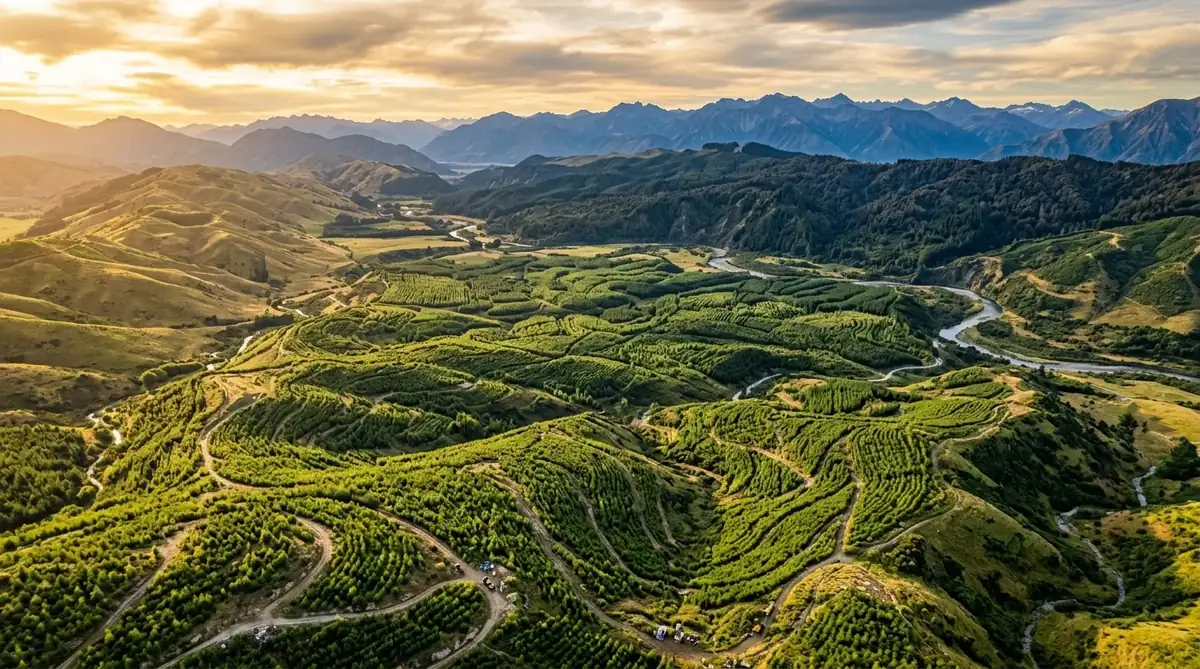
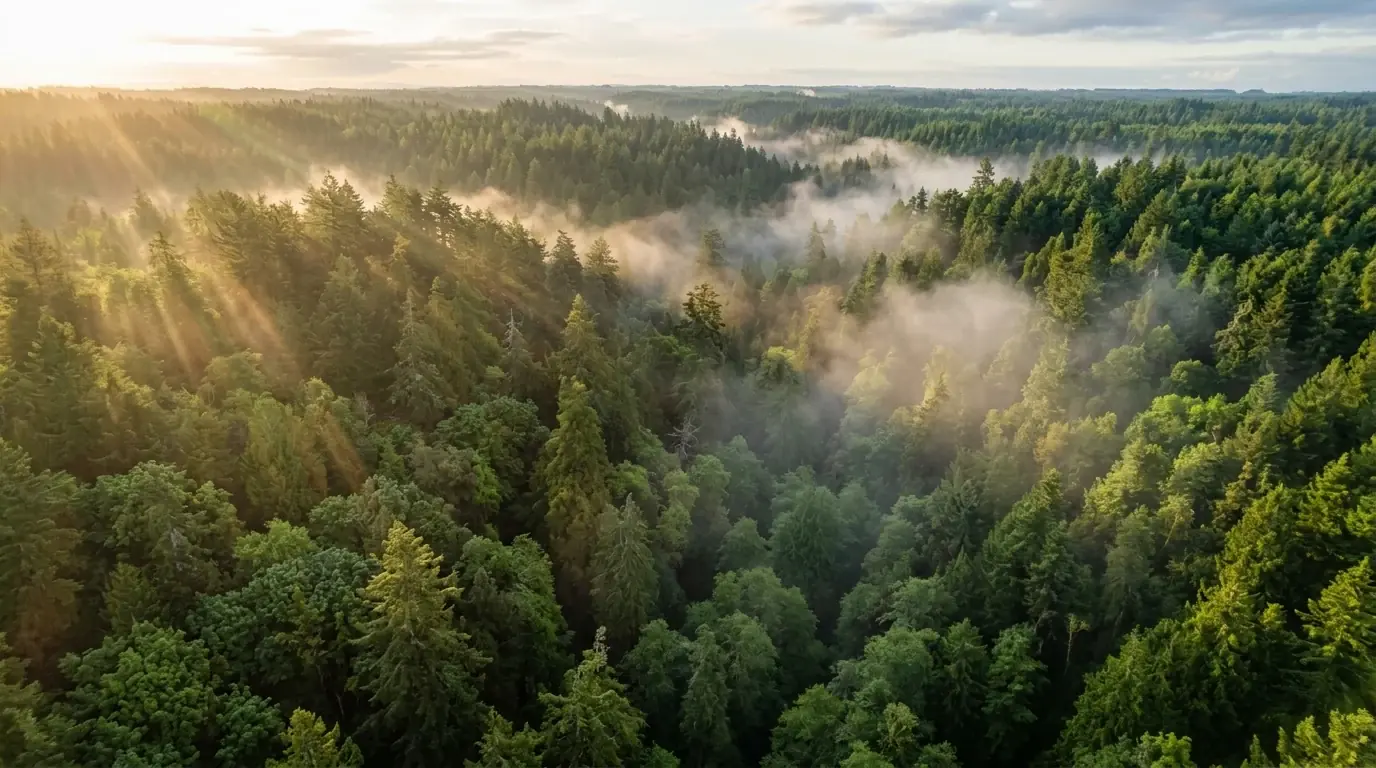
Lush emerald green forest canopy seen from above with morning mist
Temperate and tropical canopies form the living lungs of our biosphere.
Planetary Equilibrium

Why Forests Matter

Forests are not simply collections of timber—they are dynamic, interconnected biomes regulating global climate stability, continental rainfall, and terrestrial life.

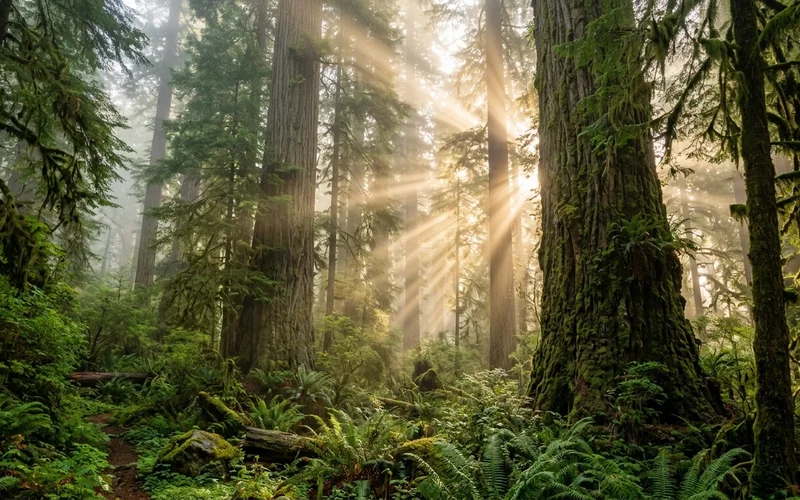
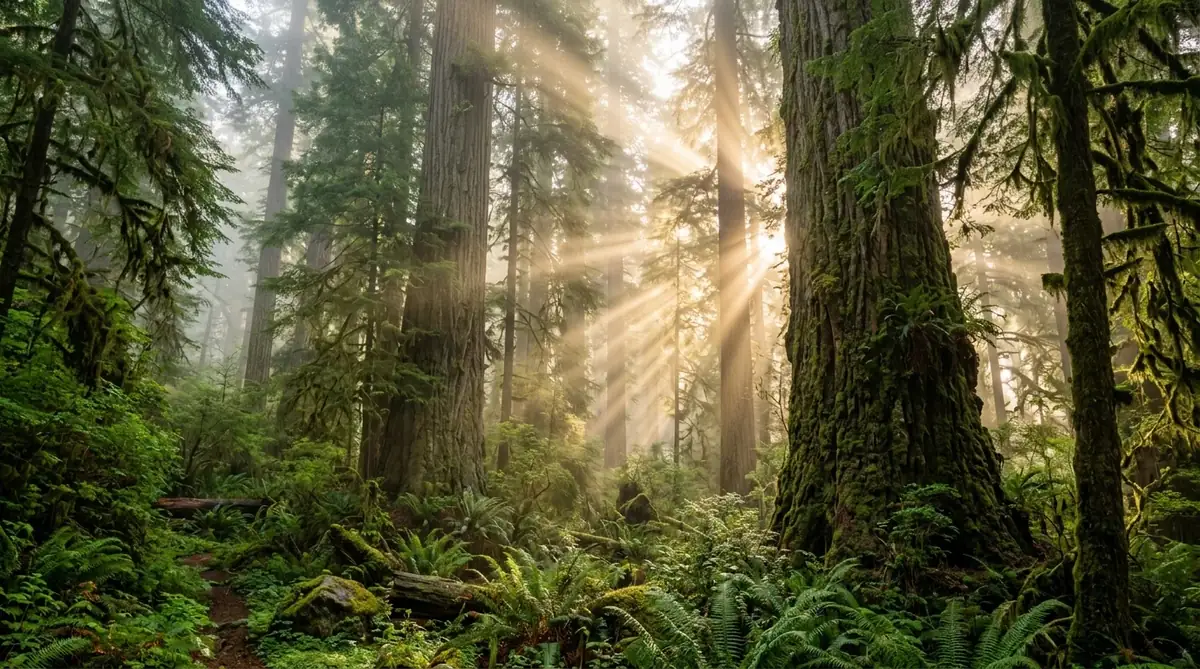
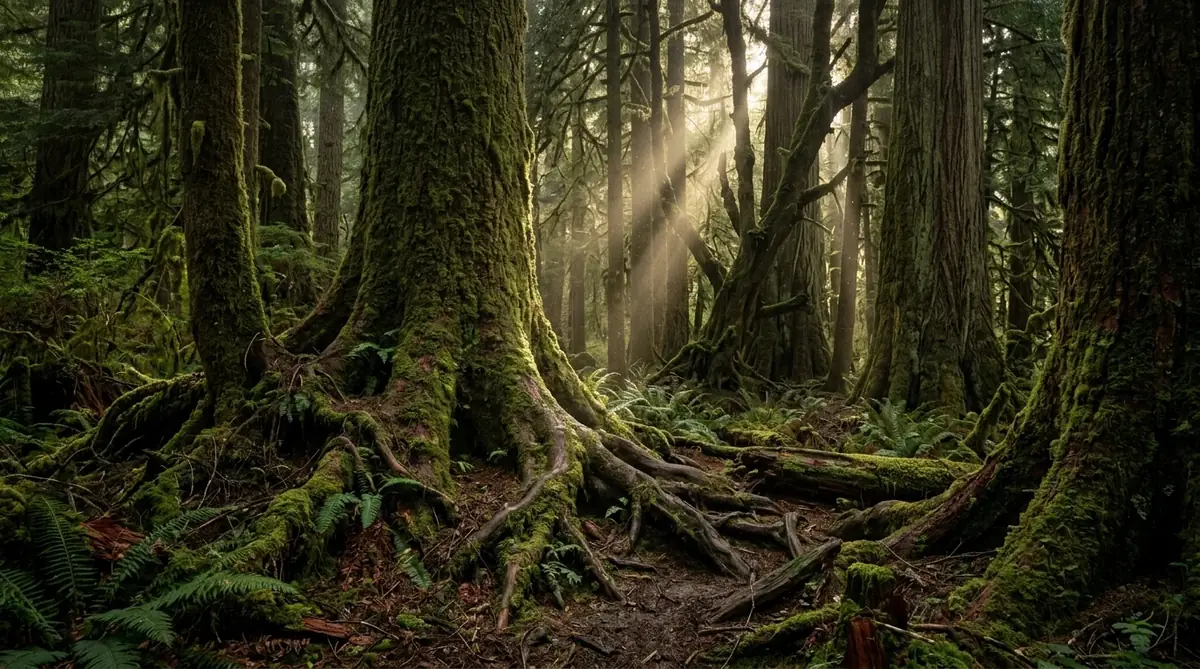
Towering old-growth trees with sunbeams illuminating the forest floor
Climate Stabilization

Carbon Sequestration

Ancient, multi-tiered forests serve as Earth’s premier terrestrial carbon reservoirs. Through relentless photosynthetic assimilation, mature trees draw down immense volumes of atmospheric carbon dioxide, locking carbon securely into sturdy trunks, extensive branch architecture, and deep mycorrhizal soil networks for centuries. Intact primary woodlands store up to double the carbon of commercial monocultures, making their long-term protection an irreplaceable planetary priority in stabilizing global climate systems.
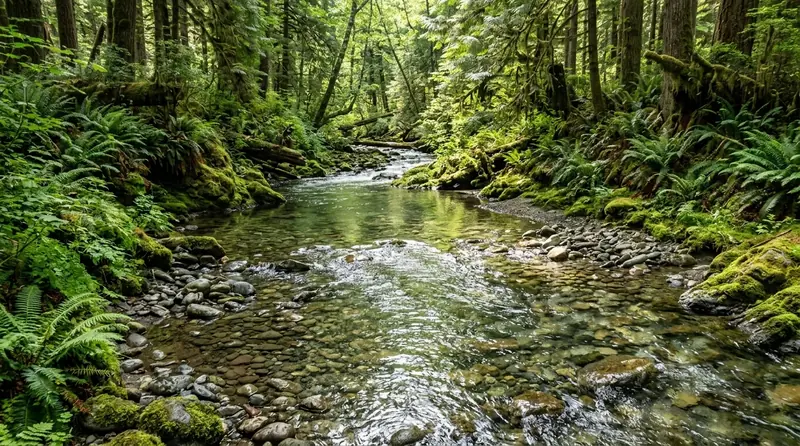
Pristine clear forest stream flowing over mossy stones and ferns
Hydrological Cycles

Water & Watersheds

Forest canopies function as gigantic planetary sponges, intercepting rainfall, purifying freshwater reserves, and continuously recharging continental aquifers. Through constant evapotranspiration, mature trees release immense volumes of clean moisture back into the atmosphere, creating circulating aerial rivers that seed life-giving rain thousands of kilometers inland. Intricate underground root networks knit soils securely, preventing disastrous hillside landslides, regulating river discharge, and safeguarding downstream human settlements from severe flash flooding.

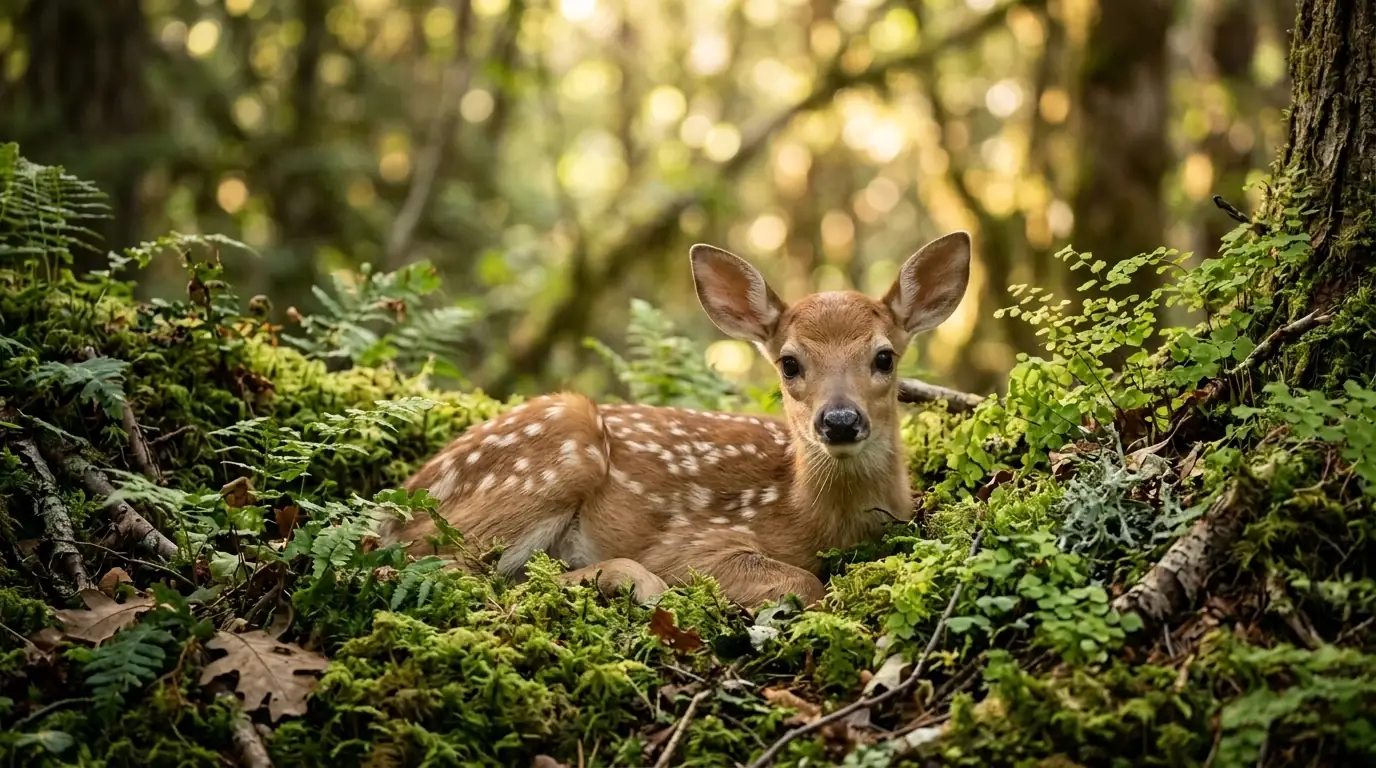
Forest wildlife nestled peacefully among moss, ferns, and ancient trees
Living Refugia

Biodiversity Reservoirs

Native woodlands shelter a vital share of Earth’s terrestrial life, providing habitat for 80% of amphibian species, 75% of bird species, and 68% of mammals (FAO SOFO 2020). These ancient canopies provide complex vertical strata where intricate symbiotic associations have evolved across millions of years. Protecting contiguous forest corridors safeguards indispensable genetic diversity, preserves vital insect pollinators, shields endangered wildlife from habitat fragmentation, and sustains the delicate ecological equilibria that underpin biological resilience across our planet.

Structural Ecology

Anatomy of an Ancient Forest: Vertical Strata

From sun-drenched emergent giants piercing the clouds down to the subterranean mycorrhizal networks of the forest floor, each vertical layer of an intact native forest fulfills specialized thermodynamic, hydrological, and biological roles.

Towering giant kapok tree crowns emergent above the rainforest canopy
Tier 01 · 40m–70m

The Emergent Layer

Towering cathedral crowns that break through the main forest ceiling. Emergent trees, such as the Brazil nut (Bertholletia excelsa) in the Amazon or towering kapoks, withstand extreme daily solar irradiance, drying winds, and temperature swings. Their broad umbrella crowns disperse lightweight winged seeds across tens of square kilometers and serve as nesting perches for apex raptors, including harpy eagles.

Source: Annals of Botany (2020)
Lush dense contiguous canopy mosaic capturing 90 percent of ambient sunlight
Tier 02 · 20m–40m

The Continuous Canopy

The primary biological power station of the biome. A dense, contiguous mosaic of overlapping leaves and branches that captures ninety percent of ambient sunlight. In tropical rainforests, over fifty percent of all plant species reside in this layer as epiphytes—orchids, bromeliads, and ferns that absorb moisture and nutrients directly from humid air currents without parasitizing host tree tissues.

Source: Smithsonian Tropical Research Institute (2022)
Shaded forest understory with diverse juvenile native ferns and saplings
Tier 03 · 5m–20m

The Shaded Understory

A humid, windless twilight realm receiving only two to fifteen percent of sunlight reaching the upper canopy. Plants here have evolved enormous, dark green leaves with high concentrations of chlorophyll-b to capture low-intensity diffuse photons. Dwarf palms, tree ferns, and juvenile climax hardwoods wait patiently here for decades until a natural treefall gap opens the sky.

Source: Biotropica (2021)
Rich forest floor and humus recycling layer supporting subterranean mycelial networks
Tier 04 · Subsurface

The Forest Floor & Humus

The subterranean recycling and storage engine. Microscopic decomposers, saproxylic beetles, springtails, and complex fungal mycelia break down fallen trunks and autumn leaves in months, returning bioavailable minerals to shallow feeder roots. Undisturbed forest soils store over half of the biome’s total carbon inventory in stabilized organic matter and glomalin matrices.

Source: Nature Reviews Earth & Environment (2022)
Evidence-Based Guidance

The Scientific Principles of Genuine Restoration

Tree planting is often simplified into commercial slogans. Leading botanical institutions have established strict scientific principles to ensure restoration creates permanent, resilient ecosystems rather than failed plantations.

Old-growth forest canopy with diverse native tree species
Targeting biodiverse native tree assemblages rather than monoculture timber plantations prevents ecological degradation. Rooted Educational Ecology Reference / CC BY 4.0
Global Best Practice

Core Guidelines from Royal Botanic Gardens Kew

In a landmark consensus paper published in Global Change Biology (2021), botanists and ecologists from the Royal Botanic Gardens Kew and Botanic Gardens Conservation International established foundational guidelines to prevent counterproductive greenwashing in global forestry initiatives:

  • 01. Protect Existing Forests First: Intact primary woodlands store carbon and protect rare species far more effectively than newly planted saplings. Preventing the felling of one hectare of old-growth forest avoids emissions that take centuries of restoration to re-absorb.
  • 02. Put Communities at the Center: Restoration projects must involve local land stewards, indigenous title holders, and smallholder farmers from initial design through multi-decade monitoring, aligning conservation with regional food sovereignty.
  • 03. Never Afforest Ancient Grasslands or Peatlands: Planting fast-growing trees into native savannas, grasslands, or bogs dries out subterranean peat, destroys rare open-ground biodiversity, and can trigger net carbon release into the atmosphere (Science, 2019).
  • 04. Maximize Native Biodiversity: Plant mixtures of 30 or more co-adapted indigenous trees, including rare and threatened taxa, to build evolutionary resilience against future pest outbreaks and thermal shocks.
10 Rules International Standards for Evidence-Based Tree Restoration Source: Global Change Biology (Di Sacco et al., 2021)
Bioregional Intelligence

Bioregional Spotlight: Threatened Forest Sanctuaries

Understanding global conservation requires examining specific landscapes where unique ecological evolutionary history meets intense anthropogenic pressures.

Forest wildlife nestled peacefully among lush Atlantic rainforest foliage
South America Tropical Hotspot

The Atlantic Forest (Mata Atlântica)

~12% remaining extent 40% endemic flora

Stretching along the eastern coast of Brazil into Argentina and Paraguay, the Atlantic Forest once spanned 1.3 million square kilometers. Centuries of commercial sugarcane, coffee, and urban expansion have reduced it to approximately twelve percent of its historical extent, mostly in fragmented tracts under 50 hectares. Despite this severe loss, it remains one of the planet's top biodiversity hotspots, harboring over 20,000 vascular plant species, of which 40% are endemic (found nowhere else).

Towering ancient dipterocarp rainforest trees in equatorial Southeast Asia
Southeast Asia Equatorial Canopy

Sundaland & Wallacea Rainforests

3–7 yr mast fruiting Critical ape & rhino refugia

Spanning the Malay Peninsula, Sumatra, Borneo, and Java, these equatorial rainforests are dominated by giant dipterocarp trees that exhibit synchronized mass fruiting cycles once every three to seven years. They represent the last wild habitat for critically endangered orangutans, Sumatran rhinos, and sun bears. Industrial palm oil conversion and peat drainage have caused catastrophic fires; restoring degraded buffer zones and connecting fragmented corridors is essential for species survival.

Ancient moss-draped temperate rainforest canopy in Western Europe
Western Europe Oceanic Temperate

Atlantic Temperate Rainforests

<1% remaining envelope Ancient sessile oak & bryophytes

Characterized by oceanic climates with high rainfall and clean maritime air, remnants of Western Europe's temperate rainforests cling to the steep coastal valleys of Scotland, Ireland, Wales, and Western Norway. Cloaked in ancient sessile oaks, hazel, and rare oceanic bryophytes, these humid woodlands cover less than one percent of their potential ecological climate envelope. Community regeneration projects are fencing out overgrazing deer to allow spontaneous birch and oak rewilding.

Interactive Lifecycle

How a Native Tree Grows

From a dormant seed to a soaring forest giant, experience the multi-decade journey of forest regeneration, soil mycorrhizal networking, and progressive carbon storage.

Stage 01: Seed Germination (Year 0) Stage 02: Root Establishment (Years 1–5) Stage 03: Canopy Architecture (Years 10–30) Stage 04: Ancient Climax (Years 100+)
Ecological Intelligence

Did You Know?

Documented scientific facts highlighting the extraordinary influence of forest canopies on planetary life.

10 People

A single mature leafy beech tree transpires and produces enough daily oxygen to sustain ten breathing human beings.

Source: USDA Forest Service Research Bulletin
+50% Carbon

Natural, biodiverse old-growth forests sequester up to 50% more carbon per hectare than commercial single-species timber plantations.

Source: Nature Ecology & Evolution (2022)
10M Hectares

The planet loses roughly 10 million hectares of natural woodland every year—an area equal to approximately 27 football pitches every single minute.

Source: UN FAO Global Forest Resources Assessment
Common Questions

Frequently Asked Questions

Clear answers on Rooted's mission, scientific foundation, and how to get involved.

What is Rooted's mission as an educational awareness project?

Rooted is an open environmental awareness platform designed to democratize forest ecology and climate science. Rather than selling commercial planting services or carbon credits, we provide factual research, interactive growth models, and practical stewardship guides to help individuals and communities advocate for genuine planetary rewilding.

How does taking the pledge help if Rooted is educational?

The Million Seed Pledge is a collective commitment to personal conservation habits, ethical ecological choices, and supporting community-led grassroots tree-planting groups. Aggregating pledges demonstrates strong public demand for old-growth forest protection and connects citizens with vetted local conservation organizations.

Where does Rooted source its scientific data and deforestation statistics?

All figures on Rooted are drawn directly from peer-reviewed scientific studies and reputable international organizations, including the United Nations Food and Agriculture Organization (FAO), the Intergovernmental Panel on Climate Change (IPCC), Global Forest Watch, and the World Resources Institute (WRI).

How can I get involved in direct native tree planting and rewilding?

You can explore our dedicated Action Hub (action.html), which lists community-led native seed networks, ethical rewilding initiatives, and practical methods such as Miyawaki pocket forests that individuals can plant in their own neighborhoods.

Join the Movement

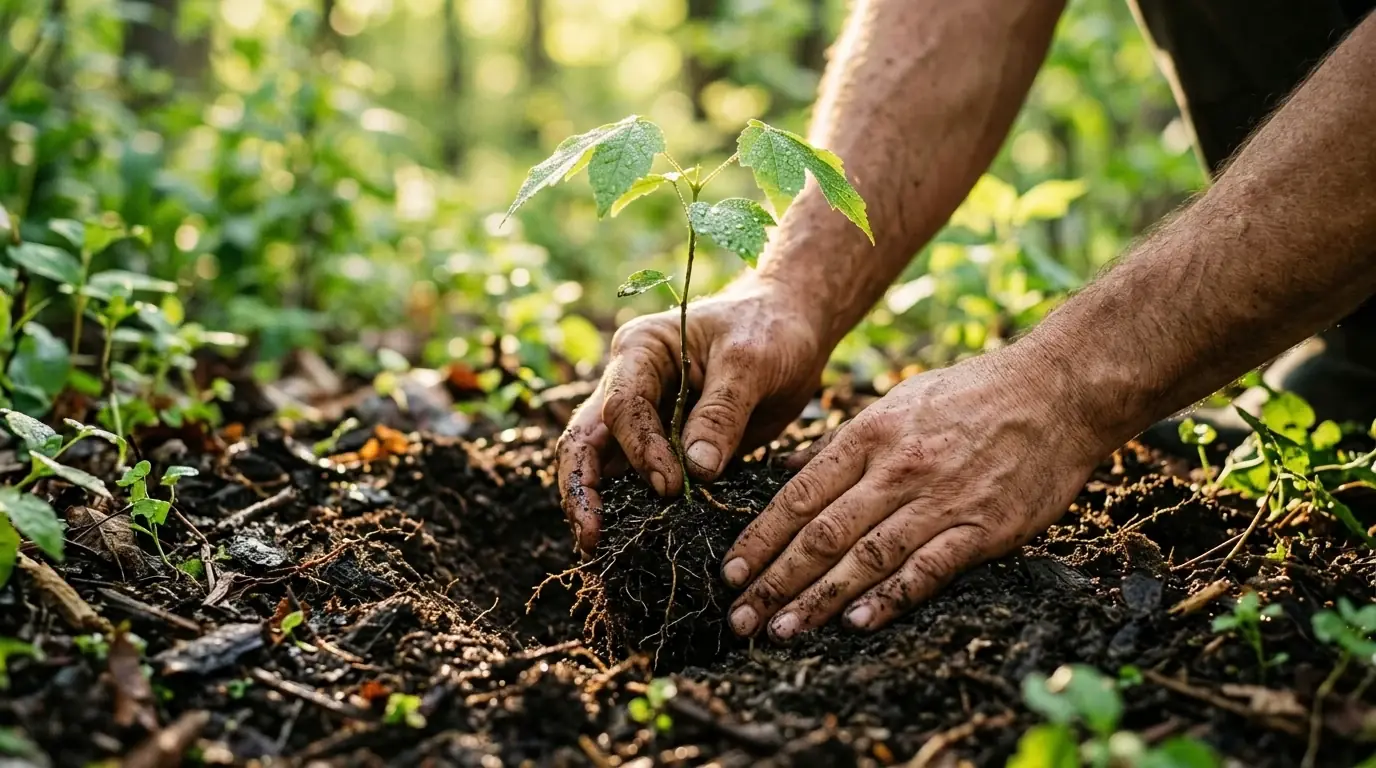
Plant the First Seed

Every monumental forest begins with a single, patient act of stewardship. Commit your pledge today and help restore living green to Earth.