Lifecycle of Reforestation

How a Tree Grows

Scroll to witness the living architecture of nature — from a dormant seed sleeping beneath the humus into an ancient, sheltering canopy.

Stage 1 of 4 • Seed 0%
🌰 Stage 01 • Germination

The Seed

Resting in soil, awakened by rain.

Settled under autumn leaf-litter, the acorn absorbs rainwater and soil nutrients. The hardened outer pericarp splits, dispatching a vital primary taproot straight downward into subterranean aquifers to secure moisture and anchor against storms.

Timeframe Days 0 – 30
Primary Force Radical anchoring
Scroll down to continue tree growth
Ecosystem Services

What a Tree Gives Back

A single tree is not merely wood and foliage—it is a sophisticated biophysical engine that stabilizes local hydrology, locks atmospheric carbon into deep soils, moderates regional heat extremes, and creates complex vertical sanctuaries.

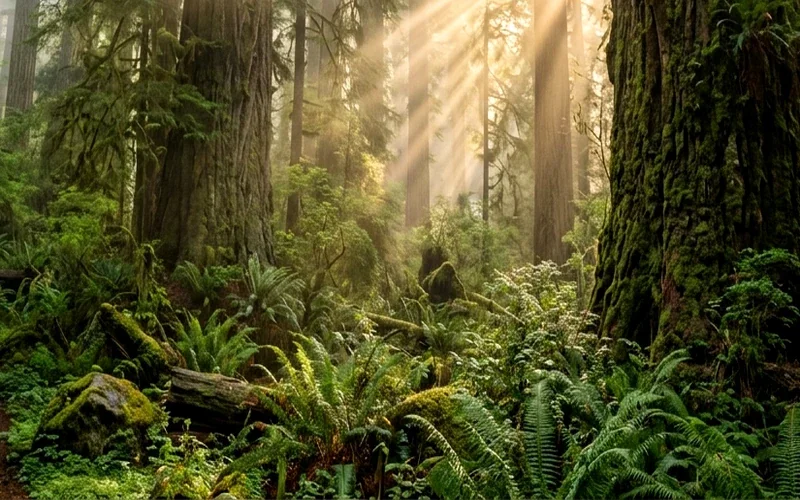
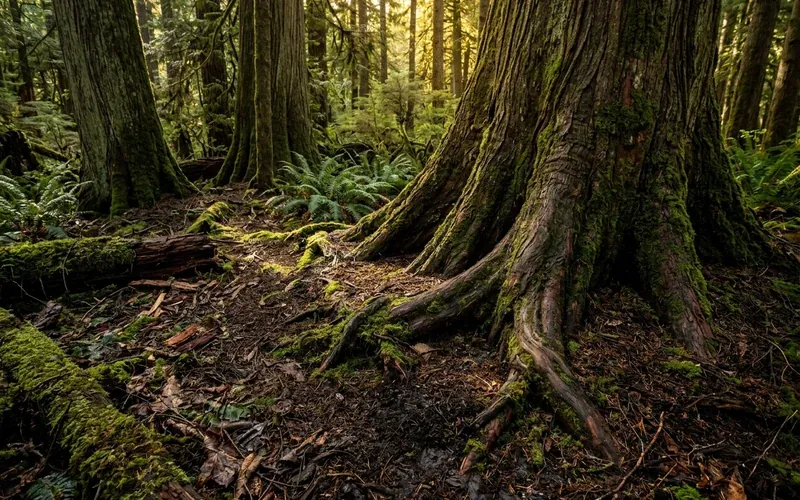
Old-growth forest soil and root systems sequestering atmospheric carbon
Carbon Sequestration

Atmospheric Sequestration & Soil Vaulting

~22 kg CO₂/yr per mature tree

Through photosynthesis, trees extract ambient carbon dioxide, locking it into solid wood and pumping liquid carbon sugars into subterranean fungal humus. Over half of a forest’s carbon is stored beneath the forest floor in stabilized mineral soils, keeping it sequestered across centuries.
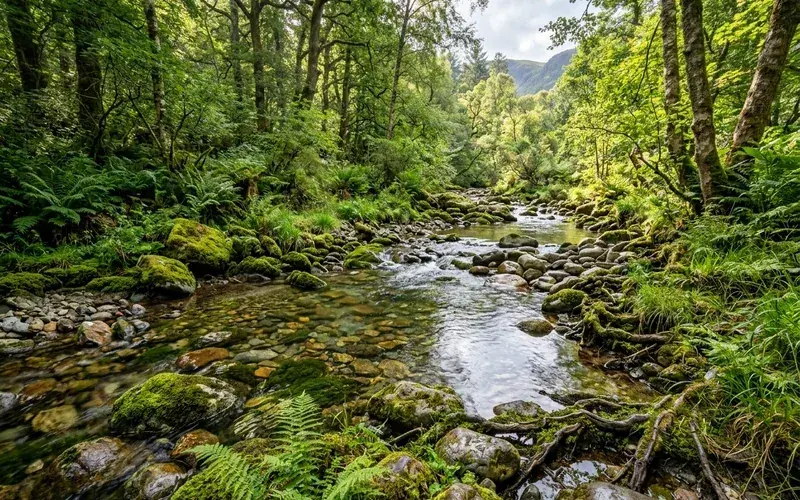
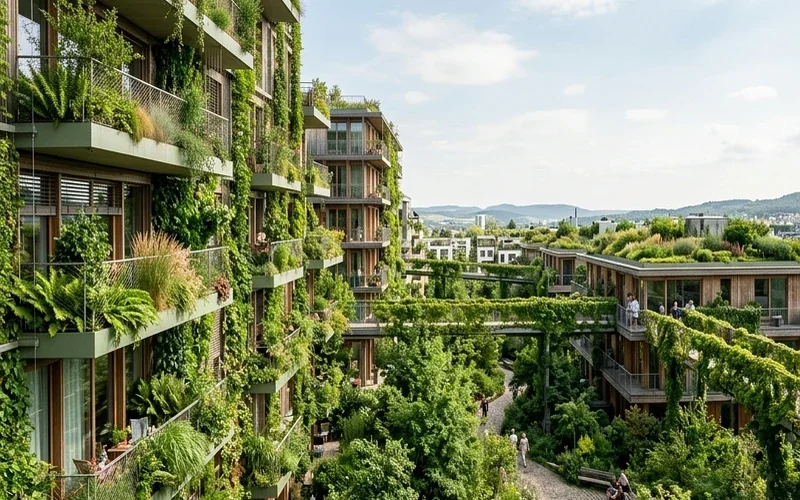
Pristine mountain stream filtered through riparian tree roots and stones
Hydrological Cycle

Water Filtration & Aquifer Recharge

38,000+ liters cycled annually

Deep root networks function as living subterranean sponges. They break up compacted subsoil, increase ground permeability by up to 300%, and filter chemical runoff before it reaches streams. Forests also drive biotic pumps, returning clean moisture to the atmosphere through daily transpiration.

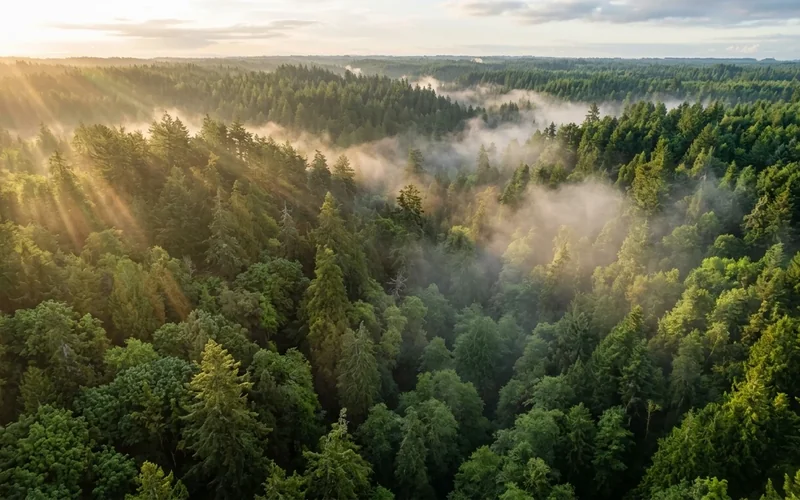
Dense green tree canopy providing shade and cooling microclimate
Microclimate Shield

Canopy Cooling & Thermal Moderation

1°C to 5°C ambient cooling (up to 12°C surface)

Dense leafy canopies deflect harsh solar radiation while continuous evapotranspiration releases moisture vapor into the atmospheric boundary layer. Shaded ground surfaces may be 11°C to 25°C cooler than unshaded asphalt, lowering neighborhood ambient air temperatures by 1°C to 5°C (US EPA).

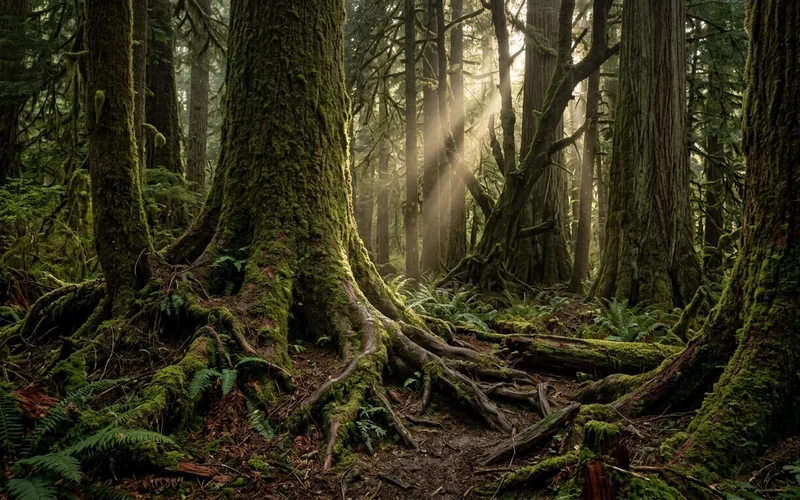
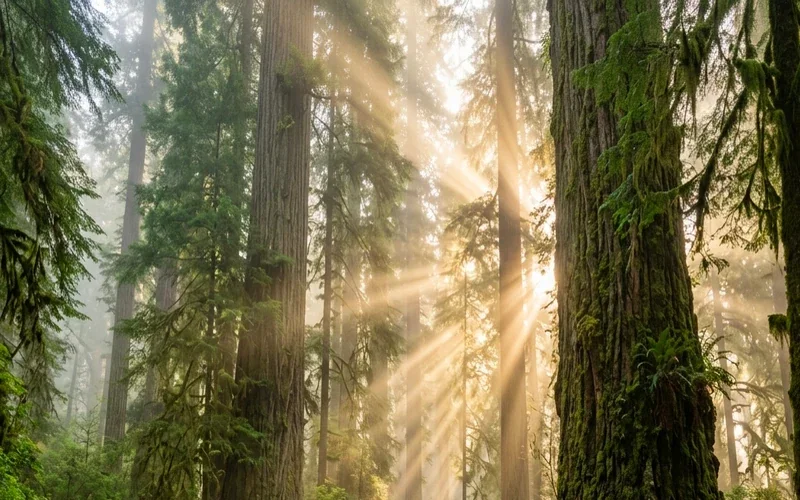
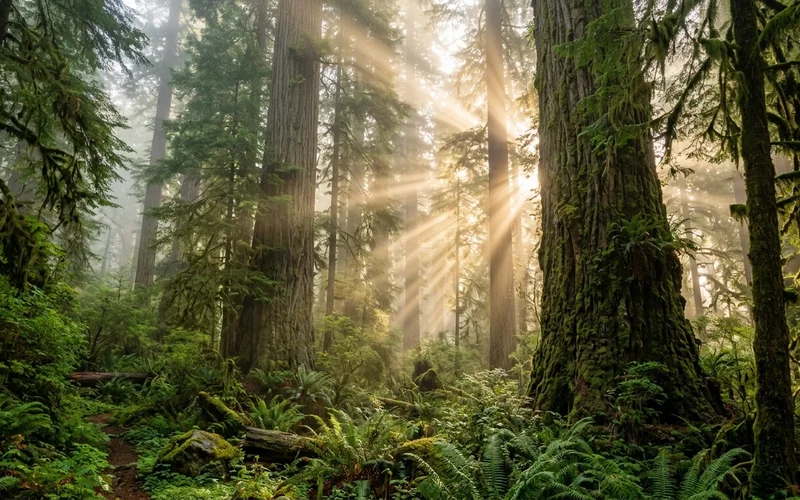
Ancient moss-draped forest canopy teeming with diverse wildlife
Biodiversity Web

Canopy Stratification & Symbiosis

1,000+ symbiotic species supported

A single ancient tree forms a vertical universe. From high-canopy epiphytes, mosses, and avian nesting hollows to saproxylic insects, lichens, and subterranean nematodes, ancient trees sustain complex multi-tiered food webs that maintain irreplaceable evolutionary equilibrium.

Field Methodology

How Restoration Works in Practice

Authentic reforestation transcends simply planting saplings into raw dirt. It is an empirical ecological science combining soil diagnostic chemistry, wild seed provenance, and multi-year community stewardship.

  1. Phase 01 · Diagnostic Baseline

    Site Assessment

    Rigorous restoration begins with comprehensive ecological evaluation rather than indiscriminate planting. Ecologists survey the degraded landscape to test soil acidity, organic depth, micronutrient levels, and compaction. They map local microclimates, hydrological drainage pathways, and historical forest baselines to understand why original cover receded. Identifying lingering invasive species, surrounding seed sources, and anthropogenic pressures establishes whether active planting or assisted natural regeneration is required. This diagnostic phase ensures that every subsequent conservation investment rests on empirical ecological ground.

  2. Phase 02 · Community Composition

    Native Species Selection

    Success hinges on composing diverse, historically accurate species assemblages tailored to local microtopography. Rather than commercial monocultures, restoration teams curate a multi-layered matrix of pioneer, intermediate, and climax species from regional reference ecosystems. Pioneer species with deep taproots fix nitrogen and stabilize erosion quickly, while canopy emergents and shaded understory shrubs follow closely behind. Designing this natural plant community ensures balanced pollinator networks, enhances resilience against emerging climate stress, and prevents vulnerability to species-specific pests or pathogens.

  3. Phase 03 · Genetic Provenance

    Seed Collection and Propagation

    Healthy forests demand high genetic diversity sourced directly from wild, resilient regional populations. Trained collection teams ethically harvest ripe seeds across multiple wild mother trees within distinct ecological zones, avoiding genetic bottlenecks. In decentralized community propagation centers, seeds undergo stratified dormancy breaking before germination in biodegradable fibrous containers. Seedlings receive tailored mycorrhizal fungal inoculants, natural leaf-compost substrates, and rigorous outdoor hardening-off periods. By mirroring local light, temperature, and moisture cycles, seedlings develop vigorous root masses before field outplanting.

    Community tree propagation center with healthy native saplings growing in biodegradable containers
    Decentralized native propagation hubs cultivate regionally adapted saplings in compost-rich substrates.
  4. Phase 04 · Seasonal Outplanting

    Planting

    Field planting takes place during optimal seasonal moisture windows, primarily early in the rainy season to minimize transplant shock. Planters excavate deep, aerated holes without disturbing undisturbed soil horizons, placing root collars flush with the natural surface level. Incorporating native biochar, beneficial microbial inoculants, and organic mulch suppresses competing weeds while locking vital soil moisture around the tender roots. Spacing follows natural clumped distributions rather than rigid agricultural rows, creating dynamic microclimates that mimic self-seeded juvenile forests.

    Ecologists and local volunteers planting native tree saplings on a rewilding landscape
    Cooperative community planting adheres to natural spatial clustering and deep mulching.
  5. Phase 05 · Early Stewardship

    Aftercare

    Young saplings require deliberate stewardship through their vulnerable initial establishment years. Conservation stewards deploy protective biodegradable tree shelters or thorn barriers to prevent herbivore browsing, livestock grazing, and rodent damage. Teams conduct regular weeding around root zones, eliminating competitive invasive grasses that choke out light, nitrogen, and groundwater. Periodic supplemental mulching preserves critical soil moisture during extreme summer heatwaves. Diligent physical pruning removes diseased tissues promptly, giving young root structures the resources necessary to survive climate anomalies.

  6. Phase 06 · Long-Term Verification

    Monitoring

    Long-term restoration effectiveness is evaluated through structured multi-year ecological auditing, field telemetry, and rigorous biodiversity surveys. Drones equipped with multispectral lidar sensors fly low-altitude grids to measure canopy closure, biomass accumulation, and sapling survival rates across remote tracts. On the ground, botanists calculate structural complexity indices, survey returning bird and pollinator populations, and sample soil microbial activity. These continuous monitoring feedback loops inform adaptive management decisions, replanting needs, and permanent conservation protection agreements for generations to come.

Botanical Profiles

Species Examples Across Global Biomes

Every biome on Earth has evolved keystone trees that anchor food webs, regulate moisture cycles, and build resilient vertical ecosystems. Discover six benchmark species driving ecological recovery worldwide.

Majestic English Oak (Quercus robur) with a broad, spreading canopy
Temperate Broadleaf

English Oak

Quercus robur
Habitat Western & Central European lowland river valleys and clay soils
Ecological Role Supports 2,300+ species of birds, insects, and fungi while anchoring deep topsoils
Growth Rate 🌱 Slow to Moderate (30–45 cm/yr; lifespan 900+ yrs)
Towering Coast Redwood (Sequoia sempervirens) trees shrouded in morning coastal fog
Coastal Rainforest

Coast Redwood

Sequoia sempervirens
Habitat Pacific Northwest coastal fog belt (Oregon to Central California)
Ecological Role Highest per-hectare carbon vault on Earth; condenses marine fog to nourish forest floor
Growth Rate 🌱 Fast (90–150 cm/yr in youth; reaches 100m+ height)
Red Mangrove (Rhizophora mangle) stilt prop roots wading in tropical coastal waters
Marine & Intertidal

Red Mangrove

Rhizophora mangle
Habitat Tropical and subtropical brackish estuaries, coastal lagoons, and reef margins
Ecological Role Stilt roots buffer storm surges, trap sediments, and nurture 75% of commercial reef fish
Growth Rate 🌱 Moderate (40–60 cm/yr; forms dense marine thickets)
Umbrella Thorn Acacia (Vachellia tortilis) in a wide golden savanna landscape
Arid Savanna & Sahel

Umbrella Thorn Acacia

Vachellia tortilis
Habitat East & Southern African savannas, arid rocky plains, and sub-Saharan fringes
Ecological Role Fixes atmospheric nitrogen into arid soils, provides wildlife shade, and halts desertification
Growth Rate 🌱 Moderate (40–70 cm/yr during wet seasons; high drought resilience)
Silver Birch (Betula pendula) trees with white bark and fluttering leaves in a northern forest
Boreal & Taiga

Silver Birch

Betula pendula
Habitat Cold-temperate Eurasia, sandy heaths, peat borders, and post-fire clearings
Ecological Role Pioneer species that aerates hard soils and produces mineral-rich mulch for climax conifers
Growth Rate 🌱 Rapid (60–100 cm/yr; rapid canopy closure and nurse shelter)
Giant Kapok Tree (Ceiba pentandra) emergent crown towering above a tropical rainforest
Tropical Rainforest

Kapok Tree

Ceiba pentandra
Habitat Neotropical and West African humid riverbanks and primary rainforests
Ecological Role Colossal buttress roots prevent soil slumping; towering canopy hosts hundreds of epiphytes
Growth Rate 🌱 Very Rapid (200–300 cm/yr under humid tropical sunlight)
Science vs Assumption

Restoration Realities: Myths vs. Facts

Unexamined assumptions about tree planting frequently produce unintended ecological consequences. Here is how empirical conservation science distinguishes genuine reforestation from well-intentioned fallacies.

Myth

“Planting any tree anywhere helps the environment.”

Scientific Fact

Indiscriminate tree planting can devastate native ecosystems. Introducing water-hungry species into natural grasslands or commercial timber into ancient peatlands depletes groundwater tables, increases wildfire intensity, and wipes out endemic biodiversity. Successful restoration requires native species tailored strictly to historical baseline conditions.

Myth

“Commercial tree plantations deliver the same benefits as natural forests.”

Scientific Fact

Industrial single-species plantations (such as pine or eucalyptus) operate as biological deserts, supporting under 10% of native fauna. Because plantations are clearcut every few decades, stored carbon quickly returns to the atmosphere. Multi-layered native forests store twice as much carbon permanently and harbor resilient trophic webs.

Myth

“A one-time mass planting event solves deforestation.”

Scientific Fact

Without long-term aftercare and community stewardship, seedling survival rates vary widely and unmanaged plantings frequently suffer severe mortality from weed competition, herbivory, and seasonal drought (Coleman et al., 2021; Phil. Trans. R. Soc. B, 2023). Real restoration is an ongoing multi-decade stewardship process encompassing weed suppression, protective fencing, water management, and multi-year drone telemetry monitoring.

Myth

“Forest restoration takes centuries before providing tangible benefits.”

Scientific Fact

While old-growth canopies take centuries to mature, critical ecosystem services rebound rapidly. Within three to five years, fast-growing native framework trees close canopy gaps (achieving up to 10x faster initial canopy closure in dense Miyawaki plots), reduce soil temperatures by up to 8°C, filter runoff, re-establish wild pollinator networks, and restore local microclimates.

Frequently Asked Questions

Direct answers on verification telemetry, seed provenance, natural regeneration, and hydrological buffers.

How do ecological initiatives evaluate whether young trees actually survive?
Rigorous ecological initiatives combine regular on-the-ground botanical field sampling with multispectral lidar drone flights and high-resolution satellite canopy telemetry. Restoration parcels are monitored over a multi-year timeline, tracking canopy closure, biomass accumulation, and sapling vitality. If natural mortality occurs, adaptive management protocols guide corrective replanting.
Why is genetic provenance so important in seed collection?
Seeds harvested from wild mother trees within local bioregional seed zones possess epigenetic adaptations to regional frost dates, drought cycles, and native soil chemistry. Using nonlocal commercial stock causes phenological mismatch—such as premature bud break during false springs—leaving plantations vulnerable to catastrophic frost and pathogens.
Can natural forest regeneration work better than hand planting?
In many landscapes, yes. Assisted Natural Regeneration (ANR) is the most cost-effective and biodiverse method when remnant forests or viable soil seed banks exist within 500 meters. By fencing against livestock grazing, suppressing invasive weeds, and eliminating wildfires, wild seedlings sprout spontaneously without costly propagation infrastructure.
What is the difference between reforestation and afforestation?
Reforestation restores historical forest cover to lands that were recently logged or degraded. Afforestation establishes tree canopy on landscapes that were historically open ecosystems, such as native savannas, grasslands, or peat bogs. Afforestation in naturally open biomes often causes catastrophic loss of endemic wildlife and disrupts regional groundwater.
How do restored forests help prevent extreme drought and flash flooding?
Forest soils structured by deep root networks act as colossal subterranean sponges. They slow stormwater runoff, increase soil rainwater infiltration rates by up to 300%, recharge regional aquifers, and gradually release purified groundwater to streams. Transpiration from mature canopies also regulates continental rainfall patterns.
Next Horizon

Explore Earth's Vital Ecosystems: Focus Areas

From ancient old-growth canopies and urban microforests to living mangrove shorelines, discover the three critical biomes where focused ecological restoration creates lasting planetary impact.